
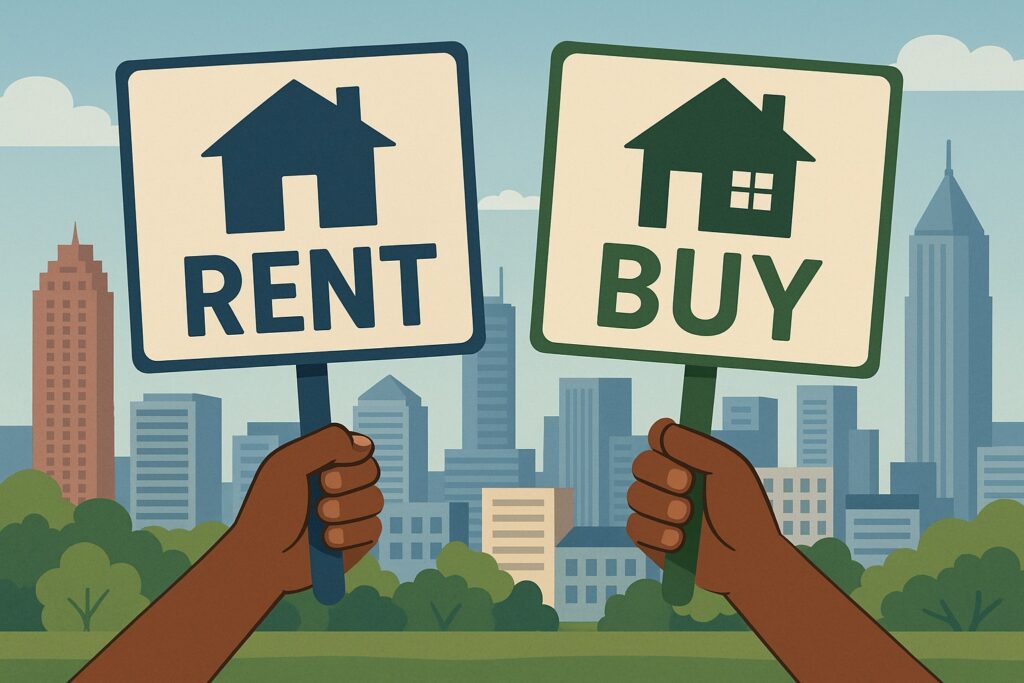
Moving to Atlanta, or even shifting neighborhoods within the metro, always comes with the same big question: should you rent or should you buy? It’s a decision that goes beyond simple numbers, touching on lifestyle choices, long-term goals, and even your stage in life. Atlanta’s growth over the past two decades has reshaped its real estate landscape, making the choice more complex—but also filled with opportunity.
Atlanta’s Housing Market at a Glance
Atlanta has long been considered one of the South’s most attractive cities, thanks to its mix of affordability, economic growth, and cultural diversity. While home prices have steadily climbed, they remain lower compared to many major U.S. markets like New York, Boston, or San Francisco. The suburbs surrounding Atlanta—places such as Alpharetta, Decatur, and Marietta—have also seen steady appreciation, largely due to demand from families seeking space, schools, and a quieter pace of life.
Renting, on the other hand, has kept pace with the rising population. Apartment complexes continue to rise across the metro area, particularly near employment centers in Midtown, Buckhead, and Sandy Springs. This means renters enjoy a wide range of options, from sleek high-rises to townhomes in family-friendly suburbs.
Why Renting Might Be the Smarter Choice
For many newcomers and young professionals, renting is the path of least resistance. The immediate benefits are clear:
- Flexibility First: Renting allows you to test the waters in Atlanta. You can live in Midtown one year, Decatur the next, and eventually decide where you truly feel at home before committing to ownership.
- Low Upfront Costs: Without the need for a large down payment, renting often makes it easier to settle into the city quickly. Aside from a security deposit, the barriers to entry are far lower.
- Maintenance-Free Living: From leaky faucets to lawn care, the responsibility usually falls on the landlord, not the tenant. This convenience appeals to anyone who prefers focusing on work, social life, or travel.
- Mobility in a Fast-Growing City: If your job moves or you find a neighborhood that better suits your lifestyle, you can simply move once your lease is up without the stress of selling a home.
Why Buying Can Pay Off in the Long Run
Homeownership in Atlanta is still within reach for many, and it continues to be one of the most reliable paths toward building wealth. Consider these points:
- Equity and Appreciation: Instead of paying rent that provides no return, a mortgage allows you to build equity. With Atlanta’s steady housing demand, homeowners often benefit from rising property values over time.
- Consistency in Payments: While rents can rise with each renewal, a fixed-rate mortgage remains stable. That predictability can be a major advantage for long-term financial planning.
- Tax Incentives: Homeowners may benefit from deductions on mortgage interest and property taxes, helping reduce overall tax burdens.
- Control Over Your Space: Owning gives you freedom to remodel, expand, or decorate however you like. From finishing a basement to landscaping a backyard, personalization is part of the reward. And as you move into your new place, it’s smart to think about home security upgrades to protect your investment and give you peace of mind.
Financial Realities: Renting vs. Buying
Money plays the biggest role in this decision. In Atlanta’s more expensive neighborhoods—Virginia-Highland, Buckhead, or Old Fourth Ward—renting can be the more affordable short-term option, since purchasing in these areas requires significant upfront investment.
In suburban markets, however, the balance shifts. Towns like Kennesaw, Johns Creek, or Marietta often offer homes at a price point where monthly mortgage payments may rival or even beat comparable rental rates. The long-term equity potential in these areas can make ownership a smart financial move.
The Lifestyle Factor
Numbers aside, lifestyle choices strongly influence whether renting or buying is right for you.
- Young Professionals: Renting provides freedom and proximity to nightlife, job hubs, and short commutes.
- Families: Buying often becomes more appealing because of stability, access to schools, and the ability to grow into a home. Installing home security systems or enhanced locking mechanisms is often part of long-term planning for families.
- Frequent Movers: If relocation or career shifts are likely, renting is the safer option.
- Retirees or Downsizers: Buying in low-maintenance communities or condos can create a balance between ownership benefits and convenience.
Timing and Future Plans
One practical rule of thumb: if you plan to stay in Atlanta for fewer than three to five years, renting generally makes more sense. Selling a home after a short period may not give enough time to build equity and recover closing costs. However, for those ready to commit longer, buying becomes an investment not just in property, but in community and stability.
Final Word: What Works Best for You
There’s no one-size-fits-all answer to the renting versus buying question in Atlanta. Instead, the decision depends on how long you plan to stay, how much financial flexibility you want, and whether stability or mobility matters more in this chapter of your life.
Renting offers convenience, freedom, and less upfront cost. Buying provides stability, long-term financial benefits, and a chance to put down roots. Atlanta’s diverse housing market makes either path viable—it’s just a matter of which aligns with your goals.
If you’re on the fence, consider starting with a rental to get a feel for the city’s many neighborhoods. When the time feels right and your finances are aligned, you can transition into ownership with confidence. Atlanta’s continued growth means both options will remain strong, but the choice is deeply personal and depends on what you want out of your next move.
The written content on this page was generated by ChatGPT.