
Utility Costs Across Metro Atlanta: What Residents Pay

When people compare the cost of living in Atlanta, housing usually gets the most attention. But there is another monthly expense that can make a noticeable difference in your budget: utilities.

Electricity, natural gas, water, sewer service, trash collection, and internet can add several hundred dollars to a household’s monthly expenses. The amount you actually pay depends on where you live, the size and age of your home, the type of heating and cooling system you use, and how much energy and water your household consumes.

For anyone considering a move to Metro Atlanta, understanding utility costs can make it easier to compare communities such as Alpharetta, Roswell, Marietta, Sandy Springs, Johns Creek, Decatur, Suwanee, Woodstock, and other popular suburbs.

Utility Costs Across Metro Atlanta: What Residents Pay
image generated using Google Gemini AI

How Much Do Utilities Cost in Metro Atlanta?

There is no single utility bill that applies to every Atlanta-area household. A small apartment may have substantially lower expenses than a 2,000-square-foot suburban house.

Current cost estimates put Atlanta-area household utility expenses in a broad range depending on what is included. One 2026 estimate places a typical household’s combined electricity, gas, water, sewer, and internet costs at around $387 per month, while other estimates show basic utilities varying significantly based on housing type and usage.

For budgeting purposes, homeowners and renters should consider these major categories:

  • Electricity
  • Natural gas
  • Water and sewer
  • Trash and recycling
  • Internet
  • Seasonal heating and cooling costs

It is also important to remember that some apartment communities include water, trash, or other services in rent or charge them separately as a monthly utility fee.

Electricity Costs in Metro Atlanta

Electricity is often one of the largest utility expenses for Atlanta-area households, particularly during the summer.

Atlanta’s hot and humid summers mean air conditioning can run frequently. A household with an older HVAC system, poor insulation, large windows, or a larger home can see considerably higher electric bills than someone living in a newer, energy-efficient property.

Recent Atlanta electricity data illustrates just how much bills can vary. EnergySage reports average monthly electricity spending of about $237 in one Atlanta dataset and approximately $260 in another, based on utility bills submitted through its marketplace.

Those figures should be viewed as reference points rather than a guaranteed bill. Your actual electricity cost depends heavily on consumption.

What Can Increase an Atlanta Electric Bill?

Several factors can push electricity costs higher:

  • Running air conditioning throughout the summer
  • Older HVAC equipment
  • Poor attic insulation
  • Large or poorly sealed windows
  • Larger homes
  • Electric water heaters
  • Older appliances
  • Higher household occupancy
  • Home offices and other equipment that operate throughout the day

For prospective homebuyers, asking for previous utility bills can provide a much more useful estimate than relying solely on citywide averages.

Natural Gas Costs

Natural gas is another expense to consider, although not every Metro Atlanta home uses it.

Gas may be used for:

  • Home heating
  • Water heating
  • Cooking
  • Fireplaces
  • Outdoor appliances

Georgia’s natural gas market is different from a traditional single-provider utility arrangement. Atlanta Gas Light operates the distribution infrastructure, while residential customers can select from natural gas marketers.

The amount paid can fluctuate depending on consumption, weather and the supplier’s pricing structure. Homes that use gas primarily for cooking may have relatively modest monthly gas bills, while a gas-heated home can use considerably more during colder months.

This creates an important difference between two otherwise similar houses. A home with an electric heat pump may have higher electricity consumption, while a gas-heated property shifts some of its energy expense to the natural gas bill.

Water and Sewer Costs Around Atlanta

Water and sewer costs can vary significantly depending on the municipality or county where you live.

This is particularly important when comparing Atlanta suburbs because Metro Atlanta does not operate as one single water utility system.

The City of Atlanta Department of Watershed Management currently maintains its water and sewer rate structure for the period from July 1, 2024, through June 30, 2028.

Fulton County has also adjusted its sewer rates. Beginning January 1, 2026, the county’s sewer service charge increased to $5.62 for a 30-day period, while the sewer usage rate increased to $6.72 per CCF, or approximately 748 gallons.

That means someone moving from one Atlanta-area community to another should not automatically assume that water and sewer costs will remain the same.

What Affects Your Water Bill?

Water consumption can increase because of:

  • Larger households
  • Frequent laundry
  • Longer showers
  • Older plumbing fixtures
  • Leaking toilets or faucets
  • Lawn irrigation
  • Swimming pools
  • Outdoor water use

A home with a large landscaped yard may have noticeably different water expenses from a townhouse with little outdoor space.

Trash and Recycling Costs

Trash collection is another expense that is easy to overlook when comparing Atlanta suburbs.

Depending on the community, garbage collection may be:

  • Included in municipal services
  • Billed separately
  • Included in an HOA fee
  • Arranged through a private waste company

Some apartment communities also incorporate trash pickup into a monthly service package.

When comparing homes, ask whether garbage and recycling are included in property taxes, HOA dues, rent, or a separate monthly bill. The difference may not be huge on its own, but these smaller recurring costs add up over a year.

Internet Costs in Metro Atlanta

Internet has become a basic household expense for most Atlanta residents.

A typical internet plan can cost roughly $60 to $100 or more per month depending on the provider, speed, promotional pricing, equipment charges, and whether additional services are bundled together. Current Atlanta cost estimates put internet around the $75-$84 monthly range for commonly used plans.

The good news for residents is that many parts of Metro Atlanta have access to multiple internet providers and high-speed connections.

However, availability can change from one neighborhood to the next. Two homes only a few miles apart may have different provider options.

Before buying or renting, check the exact address rather than assuming that a provider available elsewhere in the city serves the property.

Why Utility Costs Differ Between Atlanta Suburbs

One of the biggest mistakes people make when comparing Metro Atlanta communities is assuming that location alone determines utility costs.

The home itself often matters just as much.

A newer 2,000-square-foot home may be less expensive to heat and cool than an older 1,500-square-foot property with outdated windows and an inefficient HVAC system.

Here are some of the biggest factors to consider.

Home Size

More square footage generally means more space to heat and cool.

A large suburban house can therefore have significantly higher energy expenses than a smaller condo or townhome.

Age of the Property

Older homes may have outdated insulation, windows, HVAC equipment, plumbing fixtures, and appliances.

Newer construction often incorporates more energy-efficient systems, although efficiency varies by builder and individual property.

HVAC System

The heating and cooling system can have a major effect on monthly expenses.

Because summers in Metro Atlanta can be hot and humid, air conditioning efficiency is particularly important.

Household Size

More people generally means greater water consumption, more laundry, more cooking, and greater overall energy use.

Outdoor Space

Large yards can increase water consumption, particularly when irrigation systems are used regularly.

Location and Utility Provider

Different cities, counties, and utility districts can have different rates, fees, and billing structures.

This is one reason it is important to research the specific community rather than relying on an Atlanta-wide average.

Do Atlanta Suburbs Have Different Utility Costs?

Yes. Utility costs can differ from one Metro Atlanta community to another.

Consider someone comparing Alpharetta, Marietta, Sandy Springs, Johns Creek, Roswell, and Suwanee. The monthly utility difference may not come entirely from the city itself. It can also result from the type of house, local water provider, energy source, home age, and household usage.

For example, two households with the same number of residents could have very different monthly bills if one lives in a newly constructed energy-efficient townhouse and the other lives in an older detached home.

For this reason, utility costs should be considered alongside housing prices rather than treated as a standalone ranking of suburbs.

How Much Should You Budget for Utilities?

A practical approach is to create a utility budget rather than relying on one advertised average.

For a Metro Atlanta household, consider setting aside money each month for:

UtilityGeneral Budget Consideration
Electricity$100–$300+
Natural Gas$30–$100+
Water & Sewer$50–$120+
Internet$60–$100+
Trash/RecyclingVaries by location
Potential TotalSeveral hundred dollars monthly

These are budgeting ranges, not guaranteed prices. Actual bills can fall below or above them depending on the property and household.

Electricity deserves particular attention because summer air-conditioning use can create substantial seasonal swings. Likewise, natural gas expenses may increase during colder periods if the home relies on gas heating.

Ways to Lower Utility Bills in Atlanta

The easiest way to reduce utility expenses is often to improve the efficiency of the home rather than simply using less.

1. Maintain the HVAC System

Regular HVAC maintenance can help the system operate efficiently. Replace air filters as recommended and have the equipment inspected when appropriate.

2. Improve Insulation

Attic insulation can be particularly important in Atlanta’s climate. Better insulation can help keep conditioned air inside the home.

3. Use a Programmable Thermostat

Adjusting the temperature when nobody is home can reduce unnecessary heating and cooling.

4. Look for Water Leaks

A small leak can waste a surprising amount of water over time. Check toilets, faucets, outdoor spigots, and irrigation systems.

5. Use Energy-Efficient Appliances

When replacing major appliances, consider energy efficiency rather than focusing only on the purchase price.

6. Compare Internet Plans

Internet prices can change after promotional periods expire. Review your plan periodically and compare available options at your address.

7. Ask for Previous Utility Bills

This is one of the most useful steps when purchasing a home.

A seller or property manager may be able to provide recent electricity or gas bills. Those records can show how the property actually performs instead of relying on a generic citywide estimate.

What Should You Ask Before Moving to an Atlanta Suburb?

If you’re deciding between communities in Metro Atlanta, add utility questions to your home-shopping checklist.

Ask:

  • Who provides electricity?
  • Who provides water and sewer?
  • Is natural gas available?
  • Is the home gas or electric heated?
  • What is the average summer electric bill?
  • What is the average winter electric bill?
  • Is trash collection included?
  • Is water included in the rent or HOA?
  • Which internet providers service the address?
  • Are there irrigation or other water-related charges?
  • How old is the HVAC system?
  • How old are the water heater and major appliances?

These questions can reveal expenses that aren’t obvious from the listing price.

Are Utilities Expensive in Metro Atlanta?

Utility costs in Metro Atlanta are neither identical nor predictable enough to assign one universal monthly figure.

For many households, electricity is likely to be the largest variable utility expense, especially during Atlanta’s hot summers. Water and sewer costs can also be meaningful, while natural gas and internet add to the recurring monthly budget.

Current cost-of-living estimates generally place Atlanta utility expenses within a few hundred dollars per month for many households, but the range is wide. Redfin, for example, currently estimates Atlanta’s monthly energy bill at about $231, while other datasets based on actual submitted utility bills report substantially different electricity averages.

The difference demonstrates why prospective residents should treat online averages as starting points rather than promises.

source: Atlanta Suburban Living

Final Thoughts on Metro Atlanta Utility Costs

Utility expenses are an important part of the cost of living in Metro Atlanta, particularly if you’re deciding where to buy or rent.

The best place to live isn’t necessarily the suburb with the lowest utility rates. Instead, look at the entire picture: home price, property taxes, HOA fees, commuting expenses, utility providers, home efficiency, and the lifestyle you want.

Whether you’re considering a house in Alpharetta, a townhome in Smyrna, an older property in Decatur, or a newer community in one of Atlanta’s growing suburbs, understanding the potential utility bill can help you build a more realistic monthly budget.

Before making a move, research the exact property and utility providers serving it. A few minutes of research can give you a much clearer idea of what living in your preferred Atlanta community will actually cost.

The written content on this page was generated by ChatGPT.

The Best Atlanta Communities for Downsizing

Downsizing your home does not necessarily mean giving up the lifestyle you enjoy. For many homeowners, it is an opportunity to trade extra bedrooms, large yards, and constant maintenance for a home that is easier to manage and a community that puts more of the things you need within reach.

The Atlanta metro area offers plenty of options for people who are ready for a smaller home but do not want to leave the region. From walkable communities with restaurants and local shops to quiet suburbs with townhomes and low-maintenance neighborhoods, there is no single answer to finding the best place to downsize in Atlanta.

The right community depends on what you want your next chapter to look like. Some people want to be closer to downtown Atlanta. Others prefer a peaceful suburban setting, access to parks, or a neighborhood where they can spend less time maintaining a property and more time traveling, visiting family, or enjoying hobbies.

Here are several of the best Atlanta communities for downsizing and what makes each one worth considering.

What Should You Look for When Downsizing in Atlanta?

A smaller house is only part of the equation. The neighborhood surrounding the home can have just as much impact on your day-to-day life.

When comparing Atlanta-area communities, downsizers should consider:

  • Low-maintenance homes and landscaping
  • One-story or primary-bedroom-on-main-floor layouts
  • Townhomes and condominiums
  • Walkability and nearby shopping
  • Restaurants and entertainment
  • Access to healthcare
  • Parks and recreational opportunities
  • Property taxes and homeowners association fees
  • Distance from family and friends
  • Access to major highways
  • Proximity to Atlanta’s airport
  • Opportunities for social activities

Another important consideration is how you expect to live five or ten years from now. A home that feels manageable today may become less convenient if it has multiple staircases, a large yard, or extensive exterior maintenance.

For that reason, downsizing can be about choosing a better location just as much as choosing a smaller property.

1. Sandy Springs: Convenient Suburban Downsizing

Sandy Springs is one of the strongest choices for homeowners who want to downsize without giving up access to Atlanta amenities.

Located north of Atlanta, Sandy Springs offers a mixture of condominiums, townhomes, traditional houses, and newer developments. Its location near GA-400 and I-285 can also make it convenient for reaching different parts of the metro area.

One of the biggest advantages for downsizers is the combination of suburban surroundings and urban conveniences. The City Springs area provides restaurants, entertainment, green space, and community activities, while the broader city has access to parks and outdoor recreation.

Healthcare access is another factor worth considering when choosing a long-term home. Sandy Springs is close to major medical facilities and healthcare providers, which can be valuable as your priorities change.

Sandy Springs can be particularly appealing to someone who wants a smaller property but still wants plenty to do nearby.

Best for: Downsizers who want suburban comfort, convenient amenities, and relatively easy access to Atlanta.

2. Decatur: A Strong Choice for Walkable Living

For homeowners who are tired of getting in the car for every small errand, Decatur deserves serious consideration.

The city has a distinctive community atmosphere, with a central downtown area surrounded by restaurants, shops, entertainment, and local events. Current Atlanta-area comparisons frequently distinguish Decatur for its walkability and small-city atmosphere.

That can make a significant difference after downsizing.

Instead of purchasing a smaller home in a sprawling subdivision where almost every trip requires driving, you can look for a property near the areas you use most often. Condominiums, townhomes, and smaller homes can provide a more manageable lifestyle while keeping restaurants and community activities relatively close.

Decatur is also attractive for people who want to remain connected to Atlanta without living directly in the middle of the city.

The trade-off is that desirable, convenient locations can command a premium, so buyers should carefully compare property prices, HOA fees, taxes, and ongoing expenses.

Best for: Downsizers who value walkability, restaurants, community activities, and a more urban lifestyle.

3. Marietta: Small-City Character With Plenty of Amenities

Marietta is another excellent option for homeowners who want to simplify without moving too far away from the amenities of a major metropolitan area.

The historic Marietta Square is a major attraction. Restaurants, shops, entertainment, and community events give the area a more traditional downtown atmosphere than many suburban developments.

For a downsizer, being close to a genuine town center can be a major advantage. Rather than spending your weekends maintaining a large property, you can spend that time exploring restaurants, attending events, meeting friends, or simply enjoying the community.

Marietta also has a broad range of housing options. Depending on the location, buyers can find condominiums, townhomes, smaller single-family homes, and larger properties.

The city can therefore work for someone who wants to reduce the amount of space they maintain without necessarily moving into a high-rise or apartment.

Best for: Downsizers who want a traditional downtown, varied housing options, and a suburban setting.

4. Roswell: Nature, History, and a Relaxed Lifestyle

Roswell offers an appealing combination of established neighborhoods, outdoor recreation, and a lively historic district.

The city’s historic downtown area around Canton Street is known for restaurants, shops, and local attractions. Roswell also provides access to parks and outdoor areas, including opportunities to enjoy the Chattahoochee River.

That combination can be attractive to someone who wants a quieter lifestyle after leaving a larger family home.

Rather than choosing between urban convenience and suburban peace, Roswell offers elements of both. You can live in a residential neighborhood while remaining close to restaurants, entertainment, and recreational activities.

Roswell may be particularly appealing to downsizers who still want a house rather than a condominium but would prefer something smaller and easier to maintain.

Best for: Downsizers who enjoy outdoor recreation, historic character, and established neighborhoods.

5. Peachtree City: A Different Kind of Downsizing Lifestyle

Peachtree City stands apart from many Atlanta suburbs because of its extensive network of golf-cart paths.

That unusual feature can make everyday transportation and recreation feel very different from conventional suburban living. The community is planned around neighborhoods, shopping areas, lakes, recreational facilities, and connected paths.

For someone looking to downsize, the appeal is not simply having a smaller house. It is having a community designed around a particular lifestyle.

Peachtree City can be especially attractive to people who enjoy spending time outdoors and want access to recreational amenities close to home.

Its location south of Atlanta also places it closer to Hartsfield-Jackson Atlanta International Airport than many northern suburbs, which can be useful for frequent travelers.

The primary consideration is location. Someone who regularly travels to jobs in North Fulton or the northern suburbs may find the commute less convenient.

Best for: Downsizers who want an active lifestyle, outdoor recreation, and the unique convenience of golf-cart paths.

6. Dunwoody: Established Suburban Living Near Major Employment Centers

Dunwoody can be a practical choice for downsizers who want to remain in the northern Atlanta area while moving into a more manageable property.

The community combines established residential areas with shopping, restaurants, parks, and employment opportunities around the Perimeter Center area.

Its location is particularly useful for people who want access to the northern suburbs while remaining relatively close to Atlanta.

Downsizers should look for homes and communities that minimize maintenance rather than simply choosing the smallest property available. A well-designed townhome or condominium can potentially provide the right balance between privacy, convenience, and reduced upkeep.

Best for: Downsizers who want established neighborhoods and convenient access to the Perimeter area.

7. Brookhaven: Downsizing Without Moving Far From Atlanta

Brookhaven offers another option for homeowners who want to reduce their living space while staying relatively close to the city.

The community has restaurants, parks, shopping, and residential neighborhoods, with some areas offering a more walkable experience than traditional suburban developments.

Its location can also be appealing for someone who frequently travels between Atlanta, Buckhead, and the northern suburbs.

Brookhaven may make sense for downsizers who are not looking for a quiet retirement community but instead want to remain active and connected to Atlanta.

Best for: Downsizers who want a closer-in location with restaurants, parks, and access to Atlanta.

8. Alpharetta: Amenities and Newer Housing Options

Alpharetta is well known for its newer developments, shopping, restaurants, parks, and growing business community.

While many Alpharetta properties are designed for families, the area also has housing options that can work well for empty nesters and downsizers, including townhomes and lower-maintenance communities.

The city’s amenities are a major part of its appeal. Areas such as Avalon provide dining, shopping, entertainment, and gathering spaces, reducing the need to drive into Atlanta for every activity.

Alpharetta can be an especially good choice for someone who wants to remain in North Fulton County but no longer needs a large family-sized home.

Best for: Downsizers who want newer communities, upscale amenities, shopping, and restaurants.

9. Smyrna: A Convenient Middle Ground

Smyrna can appeal to homeowners who want a smaller property without moving too far from Atlanta.

Its location gives residents access to major roads and nearby employment centers, while the community has developed its own collection of restaurants, shopping areas, parks, and entertainment.

For some downsizers, the appeal of Smyrna is its balance. It does not require choosing between an urban neighborhood and a distant suburb.

Townhomes and other lower-maintenance housing can be worth exploring for buyers who want less yard work and fewer exterior responsibilities.

Best for: Downsizers who want convenience and suburban living with relatively easy access to Atlanta.

How to Choose the Right Atlanta Community for Downsizing

There is no universally best Atlanta suburb for downsizing. The best choice depends on what you are trying to accomplish with the move.

Start by thinking about how you actually spend your week.

If you enjoy walking to restaurants and local events, Decatur or parts of Marietta may deserve a closer look.

If healthcare access and convenience are high priorities, Sandy Springs and nearby North Atlanta communities may make sense.

If you prefer outdoor recreation and a distinctive planned-community lifestyle, Peachtree City could be a better fit.

If you want newer housing and extensive shopping and dining, Alpharetta may be worth exploring.

And if remaining close to Atlanta is important, Brookhaven or Smyrna can provide a useful middle ground.

Don’t Focus Only on the Purchase Price

One of the biggest mistakes downsizers can make is comparing homes solely by their sale price.

A smaller home can still have significant ongoing costs.

Before buying, look at:

HOA fees: Condominiums and townhomes can have monthly fees that cover exterior maintenance, landscaping, amenities, insurance, or other services.

Property taxes: Compare the annual tax burden rather than assuming two similarly priced homes will cost the same to own.

Insurance: Insurance costs can vary depending on the property, location, age, construction, and coverage.

Maintenance: A 2,000-square-foot house with a large yard may require considerably more time and money than a smaller townhome.

Utilities: Less space can mean lower heating and cooling expenses, although actual costs depend on the home’s construction and efficiency.

Future accessibility: Think about whether the home will still work if mobility becomes more limited. First-floor bedrooms, fewer stairs, wider hallways, and accessible bathrooms can become increasingly valuable.

Downsizing Doesn’t Have to Mean Giving Up

The best Atlanta communities for downsizing offer something that a simple reduction in square footage cannot: a better relationship between your home and your lifestyle.

A large suburban house may have made perfect sense when children needed bedrooms, a playroom, a garage full of equipment, and a big backyard. Years later, those same features can become responsibilities rather than benefits.

Moving into a smaller home can free up time and money while putting you closer to the activities you actually enjoy.

Metro Atlanta gives downsizers plenty of choices, from the walkable character of Decatur and Marietta to the convenience of Sandy Springs, the outdoor lifestyle of Peachtree City, and the newer amenities found in Alpharetta.

The key is to think beyond the house itself.

Choose the community first, then find the home that fits your new lifestyle. A smaller home in the right location can provide more freedom, convenience, and enjoyment than a much larger property that requires constant upkeep.

source: Minimal Ease

Final Thoughts

Downsizing in Atlanta is not about settling for less. It is about deciding what you need, what you no longer need, and where you want to spend your time.

Whether your priority is walkability, low-maintenance housing, outdoor recreation, shopping, healthcare access, or staying close to family, there is likely an Atlanta-area community that matches your plans.

Take your time comparing neighborhoods, visit them at different times of day, investigate the true cost of ownership, and think about how the property will work several years from now.

The right downsizing move should make everyday life simpler—not simply make your house smaller.

The written content on this page was generated by ChatGPT.

Where to Find Acreage and Larger Lots Around Atlanta

For many people moving to the Atlanta area, the dream isn’t necessarily a large subdivision with a neighborhood pool and houses sitting close together. Some buyers want something different: a home with room to breathe, a wooded property with a long driveway, space for a garden, a few acres for horses, or simply enough land to enjoy some privacy.

The good news is that larger lots can still be found around Atlanta. The search just tends to move beyond the city’s most densely developed neighborhoods and into communities where residential properties have historically included more land.

If you’re looking for acreage near Atlanta, several areas deserve a closer look, including Milton, Cherokee County, Forsyth County, Fayette County, Coweta County, Douglas County, Paulding County, and Henry County. Each offers a different combination of land, housing, commute times, and lifestyle.

Where to Find Acreage and Larger Lots Around Atlanta
image generated by Gemini

Why Larger Lots Are Becoming Harder to Find

Atlanta has experienced substantial growth, and many areas that once had open fields and large properties have gradually been developed into residential communities.

That makes acreage increasingly valuable. Older properties with several acres may be surrounded by newer subdivisions, while undeveloped parcels can attract buyers who want to build a custom home rather than purchase an existing property.

Historical Atlanta-area land data also shows a clear pattern: larger residential parcels have generally been more common in counties farther from the urban core. A Georgia Tech/University of British Columbia study found substantially larger average single-family residential parcel sizes in counties such as Henry, Fayette, Coweta, Douglas, and Cherokee compared with Fulton and Gwinnett.

In other words, buyers looking for several acres may have better luck expanding the search beyond Atlanta’s inner suburbs.

Milton: Upscale Homes and Open Space

Milton is one of the first places many buyers consider when they want acreage without giving up an upscale suburban lifestyle.

Located in North Fulton County, Milton is known for large homes, equestrian properties, wooded land, and spacious residential settings. Some properties feature several acres rather than the smaller lots commonly found in newer subdivisions.

The trade-off is price. Land in desirable North Fulton communities can command a premium because buyers aren’t simply paying for acreage. They’re also paying for location, schools, established neighborhoods, and access to employment and shopping centers.

For someone who wants a large lot while remaining close to Alpharetta and other major North Atlanta destinations, Milton can be particularly attractive.

Cherokee County: More Land and a Variety of Settings

Cherokee County is another strong option for buyers searching for acreage near Atlanta.

The county includes communities such as Canton, Woodstock, Ball Ground, and Waleska, giving buyers a range of environments. The farther north you travel, the easier it can be to find properties with a more rural appearance.

Current land listings illustrate the variety available. Properties ranging from a few acres to much larger tracts are regularly marketed in areas around Canton and Ball Ground.

Cherokee County can be a good compromise for someone who wants substantial land but still wants access to shopping, restaurants, schools, and major roads.

Why Consider Cherokee County?

  • Larger residential lots are available
  • Wooded properties are common
  • Several established communities offer suburban conveniences
  • Northern portions have a more rural atmosphere
  • Access to I-575 makes commuting more practical for many residents

Buyers should still check zoning and development restrictions on individual parcels, particularly if they have plans for animals, outbuildings, workshops, or additional structures.

Forsyth County: Acreage in a Fast-Growing Area

Forsyth County has become one of the most sought-after areas north of Atlanta, particularly around Cumming and the communities surrounding Lake Lanier.

Although significant development has taken place, larger properties can still be found, particularly outside the most heavily developed corridors.

The challenge is that demand is high. Buyers searching for several acres in Forsyth County may find that properties with desirable locations, good road access, and attractive homes come with substantial price tags.

For families who want land but don’t want to move too far from North Atlanta’s employment and commercial centers, however, Forsyth remains worth investigating.

Fayette County: Space South of Atlanta

For buyers willing to look south of the city, Fayette County offers another interesting combination of acreage and suburban convenience.

Communities such as Fayetteville, Peachtree City, and Tyrone provide different versions of suburban living, while less-developed areas can offer properties with considerably more land.

Fayette County has historically had larger residential parcels than the urban core. A Georgia land-use analysis found Fayette among the Atlanta-area counties with some of the largest average single-family residential parcel sizes.

The area can be particularly appealing to buyers who want:

  • More privacy
  • Larger yards
  • Mature trees
  • Space for gardens
  • Room for recreational activities
  • A quieter residential environment

One consideration is that acreage doesn’t automatically mean unrestricted use. Before purchasing, investigate zoning, septic requirements, easements, road frontage, and local development regulations.

Coweta County: Acreage With a More Rural Feel

Coweta County, including communities such as Newnan and Sharpsburg, is worth considering if your idea of Atlanta-area living includes a little more breathing room.

Coweta combines growing suburban communities with areas that still have farmland, wooded properties, and larger residential parcels.

Its location southwest of Atlanta also gives buyers an alternative to the increasingly expensive northern suburbs.

For people who work in Atlanta but don’t necessarily need to live close to the city center, Coweta can provide a different lifestyle—one where owning several acres is more realistic.

The county’s average single-family parcel size has historically been considerably larger than that of Fulton or Gwinnett, according to Atlanta-area parcel research.

Douglas County: A Practical Choice for West Atlanta

If you want acreage while staying reasonably close to Atlanta, Douglas County deserves attention.

Communities such as Douglasville and surrounding areas can offer larger properties while maintaining access to I-20 and the western side of the metro area.

Douglas County is particularly interesting for buyers who don’t need the prestige or price level associated with some North Atlanta acreage markets. Current real estate analysis points to the county as an area where one-to-ten-acre properties can still be found, depending on location and development.

For commuters heading toward downtown Atlanta or western employment centers, the location can make Douglas County a practical middle ground between suburban living and rural space.

Paulding County: More Space for the Money

Paulding County is another area to investigate if acreage is high on your priority list.

Centered around communities such as Dallas and Hiram, Paulding has experienced significant growth while retaining large areas of undeveloped land and open space.

The county’s comprehensive planning documents note that more than 40,000 acres of its land area is open greenspace, along with extensive recreational resources.

This doesn’t mean every property has acreage, but it helps explain why the landscape can feel considerably less dense than neighborhoods closer to Atlanta.

Paulding can be especially appealing to buyers who prioritize land over proximity to downtown.

The farther you move toward the outer portions of the county, the more important the daily commute becomes. A property that looks like a bargain may feel very different after several months of driving to work.

Henry County: Larger Properties South of Atlanta

Henry County provides another option for buyers searching south of Atlanta.

Communities such as McDonough, Locust Grove, and Stockbridge offer a range of housing options, and larger parcels can be found farther away from the most developed corridors.

Historical parcel data places Henry County among the Atlanta-area counties with particularly large residential parcels.

For buyers who want land and easy access to I-75, the southern metro area can make sense.

It’s also worth comparing different parts of Henry County rather than treating the county as one market. Property size, neighborhood development, commute times, and surrounding land uses can vary significantly.

What About Cobb County?

Cobb County is convenient, established, and highly desirable, but finding large residential lots can be more difficult than in some outer-ring counties.

That doesn’t mean acreage doesn’t exist. Properties with several acres can still be found, particularly around less-developed portions of the county and near communities such as Powder Springs and parts of West Cobb.

However, buyers should expect competition for properties that combine acreage with a convenient location.

If your priority is five or more acres, expanding the search into Douglas, Paulding, Cherokee, or other nearby counties may produce more options.

How Much Land Do You Really Need?

Before starting your search, decide what “large lot” actually means to you.

A quarter-acre lot may feel spacious compared with an urban townhouse, but it won’t provide the same experience as one acre. Likewise, five acres is very different from twenty acres.

Think about what you want to do with the property.

One to Two Acres

This may be enough if your goal is:

  • A larger backyard
  • More privacy
  • A garden
  • Outdoor entertaining
  • A detached garage or workshop

Three to Five Acres

This provides substantially more flexibility and can work well for buyers who want:

  • More privacy
  • Trails
  • Gardens
  • Recreational space
  • Small livestock, where permitted
  • Larger outbuildings

Ten Acres or More

At this point, you’re moving into a different type of property.

Large tracts can provide serious privacy and agricultural or recreational opportunities, but they also require more consideration regarding maintenance, access, fencing, drainage, utilities, and property taxes.

Don’t Buy Acreage Without Checking These Things

A beautiful property can become an expensive mistake if you only look at the house and acreage.

Before making an offer, investigate the land itself.

Zoning

Find out exactly how the property is zoned and what activities are permitted.

Don’t assume that owning five acres automatically means you can build whatever you want.

Septic and Sewer

Some acreage properties aren’t connected to public sewer systems.

If the property uses septic, have the system evaluated and determine whether the soil and site can support the intended use.

Road Access

A long private driveway may look appealing, but it can create additional maintenance responsibilities.

Check who owns the road, who maintains it, and whether there are recorded access easements.

Flood Zones and Drainage

A property can contain considerably less usable land than its advertised acreage suggests.

Streams, wetlands, steep slopes, flood zones, and drainage issues can limit where you can build.

Utilities

Determine whether water, electricity, natural gas, and other utilities are already available.

Running utilities to a remote portion of a large parcel can become surprisingly expensive.

Property Restrictions

Check for HOA rules, conservation easements, deed restrictions, and other limitations.

This is particularly important if you are purchasing land for a custom home, hobby farm, workshop, animals, or future development.

Finding the Right Balance Between Land and Location

The biggest decision for an acreage buyer around Atlanta is usually not simply how much land to buy.

It’s how far you’re willing to live from everything else.

A five-acre property in Milton can offer a very different lifestyle from a five-acre property in Paulding County. Both may provide privacy, but the commute, shopping options, schools, home prices, and surrounding development can be completely different.

That’s why it helps to divide the Atlanta metro into broad search areas.

North Atlanta: Milton, Cherokee County, Forsyth County

West Atlanta: Douglas County, Paulding County, West Cobb

South Atlanta: Fayette County, Coweta County, Henry County

From there, narrow the search based on your workplace, budget, desired amount of land, and preferred lifestyle.

Is Buying Acreage Near Atlanta Worth It?

For the right buyer, absolutely.

A larger lot can provide something that is becoming increasingly difficult to find around a growing metropolitan area: privacy and personal space.

You can have a larger garden, create outdoor living areas, keep more distance from neighbors, enjoy wooded surroundings, or simply have enough room for the property to feel like your own private retreat.

The key is understanding that acreage comes with trade-offs. Larger properties may require more maintenance, longer driveways, private wells or septic systems, and longer commutes.

For many Atlanta-area buyers, though, that trade-off is exactly what makes the search worthwhile.

source: Adorable Living Spaces

Final Thoughts

Finding acreage around Atlanta requires looking beyond the traditional list of popular suburbs.

Milton and North Fulton can be appealing for buyers seeking upscale acreage close to major amenities. Cherokee and Forsyth counties offer larger properties farther north, while Fayette and Coweta counties provide spacious alternatives south and southwest of the city. Douglas and Paulding counties can be attractive to buyers who want more land without moving extremely far from Atlanta. Henry County is another option for those considering the southern metro area.

There isn’t one perfect location for everyone. The best place to buy acreage depends on how much land you need, how much you’re comfortable spending, where you work, and what you actually plan to do with the property.

Start with those priorities, then compare individual parcels carefully. When you find the right combination of land, location, and lifestyle, owning a larger property near Atlanta can offer a level of space and privacy that’s difficult to replicate in a typical subdivision.

The written content on this page was generated by ChatGPT.
Living in Duluth, GA: A Complete Guide to One of Metro Atlanta’s Most Welcoming Communities

If you’re searching for a place that combines suburban comfort, excellent schools, a thriving local economy, and easy access to Atlanta, Duluth, Georgia deserves a closer look. Located in Gwinnett County, Duluth has transformed from a quiet railroad town into one of Metro Atlanta’s most desirable places to live. Residents enjoy a vibrant downtown, diverse dining scene, family-friendly neighborhoods, and countless recreational opportunities that make everyday life enjoyable.

Whether you’re relocating for work, raising a family, retiring, or simply looking for a fresh start, Duluth offers a balanced lifestyle that appeals to people from all walks of life.

image generated by ChatGPT

Where Is Duluth, Georgia?

Duluth is situated about 25 miles northeast of Downtown Atlanta, making it an attractive location for commuters who want suburban living without feeling disconnected from the city. Major highways including Interstate 85 and Pleasant Hill Road provide convenient access to neighboring communities such as Suwanee, Johns Creek, Norcross, Berkeley Lake, Peachtree Corners, and Lawrenceville.

Its central location also places residents within reasonable driving distance of Hartsfield-Jackson Atlanta International Airport, Lake Lanier, and the North Georgia Mountains.


Why So Many People Are Moving to Duluth

Duluth consistently attracts new residents because it successfully blends modern conveniences with a welcoming community atmosphere. While Atlanta continues to grow, Duluth maintains a pace of life that feels comfortable without sacrificing access to shopping, entertainment, healthcare, or employment.

Many newcomers appreciate:

  • Safe, well-maintained neighborhoods
  • Highly rated public and private schools
  • Beautiful city parks
  • A lively downtown district
  • Diverse restaurants
  • Community festivals throughout the year
  • Convenient commuting options
  • Strong local economy

The city continues investing in infrastructure, parks, and public spaces, making it even more appealing for long-term residents.


A Downtown That Brings People Together

Downtown Duluth has become one of the city’s biggest attractions. Instead of large shopping malls dominating the landscape, the downtown area offers locally owned businesses, coffee shops, restaurants, boutiques, and public gathering spaces.

Town Green serves as the heart of downtown, hosting concerts, outdoor movies, seasonal festivals, farmers markets, holiday celebrations, and family events throughout the year. These community gatherings help create a neighborhood feel that many larger cities struggle to maintain.

Walking through downtown, visitors quickly notice the combination of historic charm and modern development. Outdoor seating, landscaped streets, and public art create an inviting environment for both residents and tourists.


Excellent Schools Continue to Attract Families

Education is one of the primary reasons families choose Duluth. Many neighborhoods are served by highly regarded schools within Gwinnett County Public Schools, one of the largest school districts in Georgia.

Parents appreciate:

  • Academic achievement
  • Numerous extracurricular programs
  • Athletic opportunities
  • Fine arts education
  • Advanced placement courses
  • STEM-focused learning
  • College preparation resources

In addition to public schools, several respected private schools and nearby higher education institutions provide additional educational options.


A Diverse Community with Global Influence

One of Duluth’s defining characteristics is its diversity. Residents from around the world have chosen to make the city their home, contributing to a rich cultural environment that influences local restaurants, businesses, festivals, and community events.

The international influence is especially noticeable along Pleasant Hill Road, where visitors can explore a wide variety of authentic cuisines from Korea, China, Vietnam, Japan, Mexico, India, and many other countries.

This multicultural atmosphere gives Duluth a unique identity within Metro Atlanta and makes it an exciting place for food lovers and families who enjoy experiencing different cultures.


Parks and Outdoor Recreation

People who enjoy spending time outdoors will find plenty to appreciate in Duluth. The city maintains beautiful parks that encourage active lifestyles while providing spaces to relax.

Popular outdoor amenities include:

  • Walking trails
  • Bike paths
  • Playgrounds
  • Sports fields
  • Picnic shelters
  • Dog parks
  • Open green spaces
  • Community gardens

Nearby parks and nature preserves also offer hiking opportunities, fishing, kayaking, and wildlife viewing.

Residents don’t have to travel far to enjoy fresh air and outdoor recreation.


Shopping and Dining Options

Duluth provides a wide range of shopping experiences. National retailers, grocery stores, specialty boutiques, and locally owned businesses are conveniently located throughout the city.

Food enthusiasts particularly enjoy the city’s restaurant scene. Whether you’re looking for Southern comfort food, barbecue, Korean cuisine, sushi, Mediterranean dishes, Latin American specialties, or upscale dining, Duluth offers an impressive variety of options.

Its growing culinary reputation continues attracting visitors from across Metro Atlanta.


Employment Opportunities

While many residents commute into Atlanta, numerous employment opportunities exist closer to home. Duluth benefits from its proximity to several major business corridors and corporate headquarters throughout Gwinnett County and North Fulton.

Industries supporting the local economy include:

  • Technology
  • Healthcare
  • Manufacturing
  • Logistics
  • Financial services
  • Professional services
  • Retail
  • Hospitality

This employment diversity helps maintain a stable local economy while offering career opportunities across many professions.


Housing Choices for Every Lifestyle

One reason Duluth appeals to such a broad range of buyers is the variety of available housing.

Homebuyers can find:

  • Starter homes
  • Townhomes
  • Luxury communities
  • Traditional subdivisions
  • New construction developments
  • Gated neighborhoods
  • Active adult communities
  • Executive homes

Whether you’re purchasing your first property or upgrading to your dream home, Duluth offers neighborhoods that accommodate different budgets and lifestyles.


Community Events Throughout the Year

Residents enjoy an active calendar filled with community activities that encourage neighbors to connect.

Annual events often include:

  • Summer concerts
  • Food festivals
  • Farmers markets
  • Holiday celebrations
  • Art festivals
  • Outdoor movie nights
  • Cultural festivals
  • Family-friendly activities

These events strengthen the city’s sense of community while supporting local businesses.


Healthcare and Everyday Convenience

Access to quality healthcare is another advantage of living in Duluth. Residents have convenient access to hospitals, urgent care centers, specialty medical practices, dental offices, physical therapy clinics, and wellness providers throughout Gwinnett County.

Daily errands are equally convenient thanks to numerous grocery stores, fitness centers, banks, pharmacies, and shopping centers located throughout the city.


Commuting Around Metro Atlanta

For professionals working throughout Metro Atlanta, Duluth offers a practical location.

Common commuting destinations include:

  • Downtown Atlanta
  • Buckhead
  • Sandy Springs
  • Alpharetta
  • Johns Creek
  • Norcross
  • Peachtree Corners
  • Lawrenceville

Access to Interstate 85 and several major surface roads allows residents multiple commuting options depending on their destination.


Is Duluth a Good Place to Retire?

Many retirees appreciate Duluth’s slower pace compared to central Atlanta while still enjoying access to excellent healthcare, entertainment, shopping, and dining.

The combination of safe neighborhoods, beautiful parks, community events, and nearby medical services makes the city attractive for active retirees seeking convenience without sacrificing quality of life.


Reasons to Choose Duluth

Duluth continues to stand out because it successfully combines many qualities homebuyers look for in a community:

  • Strong sense of community
  • Excellent schools
  • Diverse population
  • Beautiful parks
  • Vibrant downtown
  • Wide variety of restaurants
  • Convenient location
  • Stable housing market
  • Family-friendly atmosphere
  • Growing local economy

Whether you’re a young professional, growing family, entrepreneur, or retiree, Duluth offers opportunities to build a rewarding lifestyle while remaining connected to everything Metro Atlanta has to offer.

source: Atlanta Suburban Living

Final Thoughts

Finding the right place to live involves balancing affordability, convenience, schools, recreation, career opportunities, and community. Duluth consistently performs well across all of these categories, which explains why it remains one of the most sought-after cities in Metro Atlanta.

Its welcoming atmosphere, expanding amenities, cultural diversity, and commitment to continued growth make Duluth more than just a suburb—it is a community where residents can establish long-term roots while enjoying everything the Atlanta metropolitan area has to offer.

The written content on this page was generated by ChatGPT.

Why Midtown Atlanta Is One of Georgia’s Most Walkable Neighborhoods

Few neighborhoods in the Southeast have transformed as dramatically as Midtown Atlanta. Once known primarily as a business district, Midtown has evolved into one of the most desirable places to live, work, and explore in Georgia. Wide sidewalks, tree-lined streets, iconic parks, modern residential towers, historic architecture, and an ever-growing collection of restaurants and attractions make it one of the few places in Metro Atlanta where owning a car is more of a convenience than a necessity.

For people relocating to Atlanta, choosing a neighborhood often comes down to lifestyle. Some communities offer larger homes and quieter streets, while others provide quick access to offices, entertainment, and public transportation. Midtown excels because it combines the best of urban living with green spaces, cultural landmarks, and everyday conveniences—all within walking distance.

Whether you’re a young professional, a student, a retiree, or someone simply looking for a vibrant community, Midtown offers an experience that’s difficult to match elsewhere in Georgia.

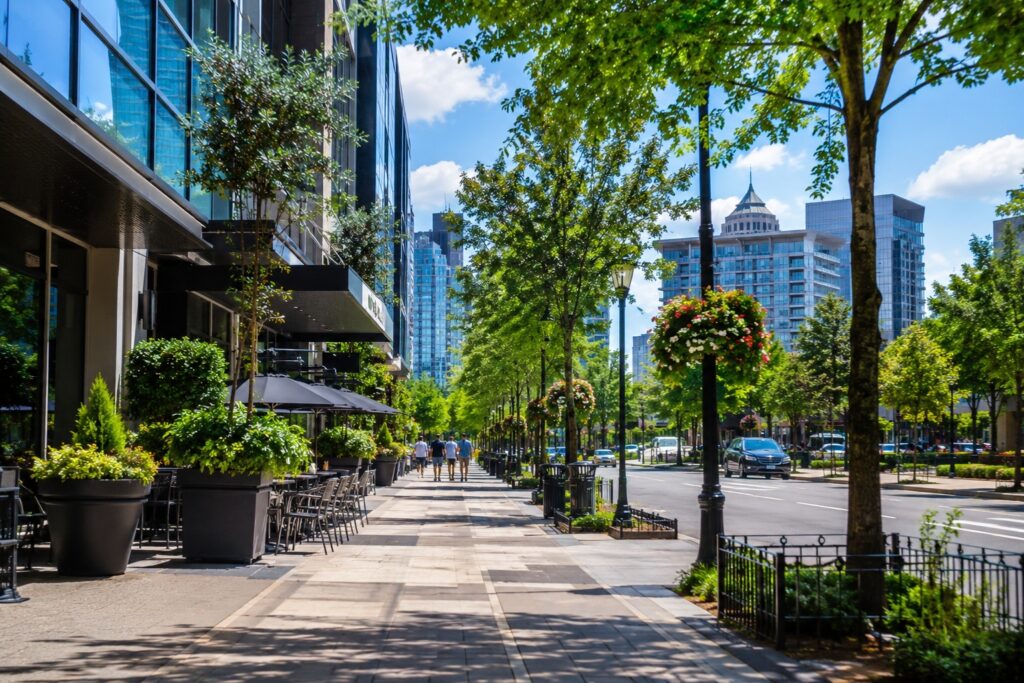
Why Midtown Atlanta Is One of Georgia's Most Walkable Neighborhoods
image generated by ChatGPT

What Makes a Neighborhood Walkable?

Walkability isn’t simply about having sidewalks. A truly walkable neighborhood allows residents to complete many daily activities without driving.

People who live in Midtown can often walk to:

  • Grocery stores
  • Coffee shops
  • Restaurants
  • Parks
  • Fitness centers
  • Museums
  • Entertainment venues
  • Medical offices
  • Schools
  • Public transportation
  • Office buildings
  • Retail shopping

Instead of spending hours in Atlanta traffic, many Midtown residents simply leave their apartment and walk a few blocks to reach work, dinner, or a weekend festival.

This level of convenience creates a healthier, more connected lifestyle while reducing commuting costs.


The Heart of Atlanta’s Urban Lifestyle

Midtown sits immediately north of Downtown Atlanta and south of Buckhead, making it one of the city’s most strategically located neighborhoods.

Residents enjoy quick access to many of Atlanta’s largest employment centers while living in a community filled with:

  • High-rise condominiums
  • Luxury apartments
  • Historic homes
  • Boutique retail
  • Local businesses
  • Tree-lined residential streets

Unlike many suburban communities where destinations are spread miles apart, Midtown places nearly everything within a compact, pedestrian-friendly area.

The neighborhood encourages residents to spend more time outdoors, explore local businesses, and become active participants in the community.


Sidewalks Designed for Everyday Living

One of Midtown’s defining features is its extensive sidewalk network.

Wide pedestrian paths connect nearly every major street, making it easy to walk between neighborhoods without constantly navigating busy intersections or missing sidewalks.

Pedestrian improvements include:

  • Wide sidewalks
  • Clearly marked crosswalks
  • Traffic-calming measures
  • Street lighting
  • Bike lanes
  • Public plazas
  • Landscaped streetscapes

These thoughtful design elements make walking feel comfortable during both weekdays and weekends.

Instead of driving several miles for basic errands, many residents complete multiple stops during one walk through the neighborhood.


Piedmont Park: Midtown’s Outdoor Living Room

Perhaps nothing defines Midtown more than Piedmont Park.

Spanning more than 200 acres, the park serves as Atlanta’s central gathering place for recreation, fitness, festivals, and outdoor relaxation.

Residents frequently walk to the park for:

  • Morning jogs
  • Evening walks
  • Weekend picnics
  • Dog walks
  • Yoga classes
  • Community festivals
  • Farmers markets
  • Sports leagues

The park’s walking trails connect naturally with surrounding streets, making it an extension of the neighborhood rather than a separate destination.

Living just blocks from one of Georgia’s most famous parks is one of Midtown’s greatest advantages.


Walking Between Restaurants and Cafés

Midtown has become one of Atlanta’s premier dining destinations.

Rather than driving from restaurant to restaurant, visitors often spend entire evenings exploring the neighborhood on foot.

The dining scene includes:

  • Upscale steakhouses
  • International cuisine
  • Local cafés
  • Rooftop bars
  • Craft breweries
  • Wine bars
  • Dessert shops
  • Breakfast cafés
  • Farm-to-table restaurants
  • Late-night eateries

Outdoor patios line many streets, creating an energetic atmosphere throughout the day.

Weekend brunch has become especially popular, with long stretches of restaurants within easy walking distance of one another.


Shopping Without Leaving the Neighborhood

Unlike suburban shopping centers surrounded by massive parking lots, Midtown offers a more pedestrian-focused retail experience.

Residents can walk between:

  • Local boutiques
  • National retailers
  • Grocery stores
  • Pharmacies
  • Fitness studios
  • Pet supply stores
  • Home décor shops
  • Convenience stores

Many apartment communities are located only a few minutes from everyday essentials, allowing residents to leave their cars parked for days at a time.

This convenience adds significant value for busy professionals who prefer spending their evenings exploring the neighborhood instead of commuting.


A Cultural Hub Filled With Attractions

Midtown is also one of Atlanta’s cultural centers.

Living here means many of the city’s most recognizable attractions are only a short walk away.

Residents regularly enjoy:

  • Art museums
  • Live theater performances
  • Symphony concerts
  • Public art installations
  • Seasonal festivals
  • Outdoor concerts
  • Community events

The neighborhood’s calendar remains active throughout the year, giving residents countless opportunities to experience something new without traveling across the city.

Its mix of arts, entertainment, and public gathering spaces creates a lively environment that appeals to both locals and visitors.


Walkability Supports a Healthier Lifestyle

One of the biggest advantages of living in Midtown is how naturally physical activity becomes part of daily life.

Instead of planning separate trips to the gym or driving to nearby destinations, many residents simply walk to where they need to go. Over time, these short walks can contribute to a healthier routine while reducing dependence on a vehicle.

Walking throughout Midtown also encourages people to spend more time outdoors. Whether it’s taking a morning stroll through quiet residential streets, meeting friends for coffee, or walking home after dinner, the neighborhood makes staying active feel effortless rather than scheduled.

Beyond physical health, walking can also help reduce stress. Midtown’s combination of shaded sidewalks, public art, and nearby green spaces creates an environment that feels welcoming for pedestrians throughout much of the year.


Public Transportation Makes Car-Free Living Possible

One of the biggest reasons Midtown stands out among Atlanta neighborhoods is its excellent access to public transportation. While much of the metro area is known for its car-centric layout, Midtown gives residents practical alternatives for commuting and everyday travel.

Several MARTA rail stations serve the neighborhood, connecting Midtown to Downtown Atlanta, Buckhead, Hartsfield-Jackson Atlanta International Airport, and other major destinations. Frequent bus routes, dedicated bike lanes, and rideshare services further expand transportation options.

For many professionals, students, and retirees, this means they can significantly reduce—or even eliminate—the need for daily driving.

Transportation options include:

  • MARTA rail stations
  • Local and express bus routes
  • Protected bike lanes
  • Electric scooter rentals
  • Rideshare services
  • Pedestrian-friendly streets
  • Easy highway access when driving is necessary

The combination of walkability and reliable transit makes Midtown one of the most accessible neighborhoods in Georgia.


A Prime Location for Atlanta Professionals

Midtown has become one of Atlanta’s leading business districts, attracting companies from industries such as technology, finance, healthcare, engineering, legal services, and media.

Many residents enjoy the convenience of walking to work rather than sitting in traffic for an hour each day.

Major employers nearby include:

  • Technology companies
  • Engineering firms
  • Financial institutions
  • Law offices
  • Medical centers
  • Startup incubators
  • Corporate headquarters
  • Universities

This work-live-play environment has made Midtown especially attractive to young professionals seeking a balanced urban lifestyle.


Higher Education Brings Energy and Innovation

Midtown is home to one of the nation’s leading research universities, helping shape the neighborhood’s innovative atmosphere.

Students, faculty, entrepreneurs, and researchers contribute to an energetic environment where education and business often intersect.

This academic presence supports:

  • Innovation hubs
  • Startup companies
  • Research partnerships
  • Technology development
  • Public lectures
  • Cultural events
  • Community engagement

The result is a neighborhood that continues to evolve while attracting talented people from across the country.


Housing Options for Every Lifestyle

Despite its reputation for luxury high-rise living, Midtown offers a surprising variety of housing choices.

Prospective residents can find:

  • Modern apartment communities
  • Luxury condominiums
  • Historic homes
  • Renovated lofts
  • Townhomes
  • Mixed-use developments
  • Boutique residential buildings

Many buildings include amenities such as rooftop lounges, fitness centers, coworking spaces, swimming pools, pet parks, and concierge services.

While housing prices are generally higher than many Atlanta suburbs, residents often find value in being able to walk to work, restaurants, parks, and entertainment.


Dining and Nightlife Create a Vibrant Community

Midtown comes alive after sunset.

Residents don’t have to travel far to enjoy an evening out because many of Atlanta’s best restaurants, cocktail lounges, rooftop bars, and entertainment venues are concentrated within a few walkable blocks.

Popular evening activities include:

  • Fine dining
  • Casual neighborhood restaurants
  • Rooftop cocktails
  • Live music
  • Comedy performances
  • Theater productions
  • Outdoor festivals
  • Art exhibitions

This lively nightlife helps create a sense of community where people regularly gather and socialize.


Festivals Keep Midtown Active Throughout the Year

Midtown hosts numerous events that bring together residents and visitors alike.

Seasonal festivals celebrate everything from music and food to art and culture, while outdoor markets and community gatherings help strengthen neighborhood connections.

Popular events often feature:

  • Local artists
  • Live entertainment
  • Food vendors
  • Craft markets
  • Fitness activities
  • Family-friendly attractions
  • Outdoor movie nights
  • Holiday celebrations

These events give Midtown a dynamic atmosphere that changes with the seasons.


Green Spaces Beyond Piedmont Park

Although Piedmont Park is Midtown’s most recognizable outdoor destination, it’s not the only place residents enjoy spending time.

Smaller parks, landscaped plazas, pocket gardens, and tree-lined streets create welcoming spaces throughout the neighborhood.

Outdoor enthusiasts can enjoy:

  • Walking trails
  • Bike routes
  • Dog-friendly areas
  • Community gardens
  • Outdoor seating
  • Public art installations
  • Scenic gathering spaces

These green areas soften the urban landscape while encouraging residents to spend more time outdoors.


Safety and Community Engagement

Like any major urban neighborhood, Midtown experiences varying levels of activity throughout the day and night. However, the area benefits from a strong sense of community involvement.

Neighborhood organizations, local businesses, property owners, and public safety initiatives all contribute to maintaining a welcoming environment.

Many residential buildings also provide:

  • Controlled building access
  • Security personnel
  • Surveillance systems
  • Well-lit entrances
  • Concierge services

Residents often describe Midtown as active and lively, with plenty of people walking throughout the day and evening.


Midtown’s Central Location Is Hard to Beat

Another reason Midtown remains highly desirable is its central location within Atlanta.

Residents are only minutes away from many of the city’s most popular destinations, making it easy to explore different parts of the metro area.

Nearby attractions include:

  • Downtown Atlanta
  • Buckhead
  • Virginia-Highland
  • Old Fourth Ward
  • Atlantic Station
  • Georgia Tech
  • Piedmont Park
  • The Atlanta Beltline

Whether commuting to work, attending a sporting event, or meeting friends for dinner, Midtown provides convenient access in nearly every direction.


Who Should Consider Living in Midtown?

Midtown appeals to a wide variety of residents thanks to its combination of convenience, culture, and connectivity.

It is especially well-suited for:

Young Professionals

Professionals appreciate the ability to walk to work, network with colleagues, and enjoy restaurants and entertainment after business hours.

College Students and Graduate Students

Nearby universities, public transportation, and apartment options make Midtown an attractive location for students.

Empty Nesters

Many retirees and empty nesters enjoy downsizing to a walkable neighborhood where dining, parks, and cultural attractions are close by.

Remote Workers

With numerous coffee shops, coworking spaces, and reliable internet infrastructure, Midtown offers an excellent environment for remote professionals.

Visitors Considering Relocation

People moving from other states often choose Midtown because it provides an authentic city lifestyle while maintaining access to parks and recreational spaces.


Why Midtown Continues to Grow in Popularity

Midtown’s popularity isn’t the result of one feature—it’s the combination of many strengths working together.

Residents enjoy:

  • Exceptional walkability
  • Reliable public transportation
  • Beautiful green spaces
  • Diverse housing options
  • Excellent dining
  • Thriving nightlife
  • Cultural attractions
  • Strong employment opportunities
  • Convenient shopping
  • A vibrant sense of community

These qualities continue to attract new residents, businesses, and investment, ensuring Midtown remains one of Georgia’s premier urban neighborhoods.


Frequently Asked Questions

Is Midtown Atlanta a good place to live?

Yes. Midtown is one of Atlanta’s most desirable neighborhoods because it offers walkability, public transportation, dining, parks, entertainment, and convenient access to major employers.

Can you live in Midtown Atlanta without a car?

Many residents do. Between MARTA, walkable streets, bike lanes, and nearby amenities, daily life can often be managed without driving.

Is Midtown Atlanta expensive?

Housing costs are generally above the Atlanta average, but many residents consider the convenience and lifestyle benefits worth the investment.

What is Midtown Atlanta known for?

Midtown is known for its walkability, vibrant arts scene, Piedmont Park, modern skyline, excellent restaurants, cultural attractions, and strong business community.

Who should move to Midtown Atlanta?

Midtown is ideal for professionals, students, retirees seeking an active lifestyle, remote workers, and anyone who values living in a pedestrian-friendly urban neighborhood.

source: All About Living In Atlanta

Final Thoughts

Midtown Atlanta has earned its reputation as one of Georgia’s most walkable neighborhoods by offering far more than convenient sidewalks. It combines urban energy with green spaces, cultural attractions, thriving businesses, and a welcoming community where residents can accomplish much of their daily routine on foot.

Whether you’re searching for a vibrant place to launch your career, a neighborhood filled with restaurants and entertainment, or a community where walking replaces long commutes, Midtown delivers an exceptional quality of life. As Atlanta continues to grow, Midtown remains a benchmark for modern city living—proving that convenience, connectivity, and community can all exist within the same neighborhood.

The written content on this page was generated by ChatGPT.

Why People Are Moving to Atlanta Metro and Which Areas Stand Out

Every year, thousands of people choose to relocate to the Atlanta metropolitan area, and it’s easy to understand why. Atlanta has evolved into one of the fastest-growing regions in the United States, attracting young professionals, families, entrepreneurs, retirees, and remote workers alike. While the city itself offers world-class entertainment, thriving businesses, and diverse neighborhoods, the surrounding suburbs provide an impressive variety of lifestyles that appeal to nearly every type of resident.

Whether someone is searching for highly rated schools, shorter commutes, larger homes, luxury communities, or affordable neighborhoods with room to grow, the Atlanta metro area offers options that fit nearly every budget and lifestyle.

The region’s continued economic expansion, steady job market, relatively moderate cost of living compared to many major U.S. cities, and abundance of recreational opportunities make it one of the country’s most desirable places to call home.

In this guide, we’ll explore why Atlanta continues to attract new residents and highlight some of the standout cities and suburbs that make the metro area such an appealing place to live.

Why People Are Moving to Atlanta Metro and Which Areas Stand Out
image generated by ChatGPT

Why Atlanta Metro Continues to Grow

Atlanta isn’t just Georgia’s capital—it serves as the economic and cultural center of the Southeast. Major corporations, healthcare systems, technology companies, film studios, logistics firms, and universities all contribute to a strong local economy.

Some of the biggest reasons people continue moving here include:

  • Diverse employment opportunities
  • Lower housing costs than many coastal cities
  • Mild climate with four distinct seasons
  • Excellent airport with worldwide connections
  • Expanding healthcare industry
  • Strong technology sector
  • Excellent colleges and universities
  • Growing entertainment and sports scene
  • Outdoor recreation and nearby lakes
  • Family-friendly communities

Unlike many large metropolitan areas, Atlanta offers a unique combination of urban convenience and suburban comfort. Residents can work in the city while living in quieter communities that offer more space and a higher quality of life.


What Makes Atlanta Metro Different?

One of Atlanta’s greatest strengths is its diversity—not only culturally but geographically.

Each suburb has developed its own identity.

Some communities focus on luxury living, while others attract families with exceptional schools. Some are known for vibrant downtown districts filled with restaurants and festivals, while others emphasize outdoor recreation, golf courses, or lake living.

Instead of forcing residents into one style of living, Atlanta Metro offers dozens of distinct communities where people can choose what fits them best.


Alpharetta: Innovation Meets Luxury Living

Alpharetta consistently ranks among Georgia’s most desirable places to live.

Originally known as a quiet suburb, it has transformed into one of the Southeast’s leading technology hubs while maintaining its suburban charm.

Residents enjoy:

  • High-paying technology jobs
  • Award-winning schools
  • Avalon shopping district
  • Excellent restaurants
  • Beautiful parks
  • Modern mixed-use developments
  • Family-friendly neighborhoods

The city’s blend of employment opportunities and upscale amenities makes it particularly attractive for professionals relocating from larger metropolitan areas.


Roswell: Historic Character with Modern Amenities

Roswell offers something increasingly difficult to find—historic charm combined with modern conveniences.

Its vibrant downtown features locally owned restaurants, boutique shopping, seasonal festivals, and preserved historic homes that create a welcoming atmosphere.

Many families appreciate Roswell because of:

  • Beautiful tree-lined neighborhoods
  • Excellent public parks
  • Chattahoochee River recreation
  • Strong schools
  • Active community events
  • Walkable historic district

Residents often describe Roswell as having a small-town feel despite being just minutes from Atlanta.


East Cobb: One of Metro Atlanta’s Most Sought-After Communities

East Cobb isn’t an incorporated city, but it remains one of the most recognized and desirable residential areas in metro Atlanta.

Families are drawn here because of its outstanding public schools, established neighborhoods, and strong property values.

East Cobb offers:

  • Highly rated schools
  • Spacious single-family homes
  • Quiet residential streets
  • Excellent youth sports programs
  • Shopping and dining options
  • Easy access to Interstate 75

Its reputation for educational excellence continues to attract buyers willing to invest in long-term homeownership.


Johns Creek: Safety, Schools, and Exceptional Quality of Life

Johns Creek consistently earns recognition as one of Georgia’s safest cities.

Residents enjoy beautifully maintained neighborhoods, extensive parks, golf courses, and excellent municipal services.

Reasons people choose Johns Creek include:

  • Top-ranked public schools
  • Low crime rates
  • Family-oriented neighborhoods
  • Corporate employment nearby
  • Scenic green spaces
  • High-quality healthcare access

The community appeals especially to professionals raising families who prioritize education and safety.


Sandy Springs: Urban Convenience Without Downtown Congestion

Located just north of Atlanta, Sandy Springs provides many of the conveniences of city living while maintaining a more residential atmosphere.

The area offers:

  • Major employment centers
  • Luxury apartments
  • Executive homes
  • Excellent restaurants
  • Entertainment venues
  • Convenient MARTA access
  • Fast commutes to Buckhead and Downtown

Many professionals appreciate the ability to live close to work without sacrificing suburban comforts.


Decatur: Walkability and Culture Combined

Decatur has earned a reputation as one of metro Atlanta’s most vibrant communities.

Its walkable downtown features:

  • Independent bookstores
  • Local coffee shops
  • Award-winning restaurants
  • Art festivals
  • Live music
  • Farmers markets

Residents who enjoy an active social scene often find Decatur to be one of the region’s most engaging places to live.

The city’s combination of culture, education, and accessibility continues attracting young professionals and families alike.


Marietta: Affordable Living with Historic Appeal

Marietta successfully blends affordability with history.

Its charming downtown square serves as the heart of the community, hosting concerts, farmers markets, festivals, and family events throughout the year.

Homebuyers appreciate:

  • Competitive home prices
  • Historic neighborhoods
  • Strong community atmosphere
  • Convenient highway access
  • Local museums
  • Excellent healthcare facilities

For many buyers seeking value without sacrificing amenities, Marietta remains an outstanding choice.


Peachtree City: A Lifestyle Unlike Anywhere Else

Perhaps no suburb in Georgia is as unique as Peachtree City.

Known worldwide for its extensive golf cart path system, residents regularly travel between neighborhoods, schools, parks, restaurants, and shopping centers without using a car.

Additional benefits include:

  • Beautiful lakes
  • Miles of walking trails
  • Highly rated schools
  • Safe neighborhoods
  • Outdoor recreation
  • Strong sense of community

Families often describe Peachtree City as offering a slower, more relaxed pace of life while still providing convenient access to Atlanta.


Suwanee: A Community Designed for Families

Suwanee has experienced remarkable growth over the past two decades while carefully preserving its welcoming atmosphere.

Its award-winning parks, community events, and thoughtfully designed town center have made it one of metro Atlanta’s premier family destinations.

Residents enjoy:

  • Excellent schools
  • Beautiful parks
  • Outdoor concerts
  • Walking trails
  • Local restaurants
  • Active neighborhood associations

Suwanee continues to rank highly among families searching for a balanced suburban lifestyle.

Milton: Peaceful Country Living with Luxury Homes

Milton has become one of the most desirable communities in North Fulton County for homebuyers seeking privacy, larger properties, and a quieter pace of life. Known for its rolling hills, horse farms, and upscale neighborhoods, Milton appeals to families and professionals who want to enjoy a rural atmosphere without giving up access to Atlanta.

Reasons people choose Milton include:

  • Estate homes on large lots
  • Highly rated public schools
  • Equestrian facilities and riding trails
  • Scenic parks and green spaces
  • Low-density residential neighborhoods
  • Convenient access to Alpharetta’s shopping and dining

Milton is ideal for those looking for luxury living surrounded by nature.


Woodstock: One of Georgia’s Fastest-Growing Communities

Woodstock has transformed dramatically over the past decade. Once a quiet suburban town, it now features a vibrant downtown filled with restaurants, breweries, boutiques, entertainment venues, and community events.

Residents love Woodstock because of its:

  • Revitalized downtown district
  • Affordable housing compared to nearby cities
  • Family-oriented neighborhoods
  • Excellent parks and walking trails
  • Strong local economy
  • Convenient commute to Atlanta

Its blend of affordability and modern amenities continues to attract both young families and retirees.


Cumming: Lake Living Meets Modern Growth

Located in Forsyth County, Cumming has experienced tremendous residential growth thanks to its excellent schools and proximity to Lake Lanier.

Popular reasons people relocate here include:

  • Access to boating and fishing
  • Top-performing school system
  • New residential communities
  • Shopping and dining expansion
  • Outdoor recreation
  • Growing employment opportunities

Cumming offers an attractive lifestyle for those who appreciate outdoor activities without sacrificing suburban conveniences.


Buford: Historic Downtown and Lake Access

Buford combines historic charm with modern development. Residents enjoy a walkable downtown while also benefiting from nearby attractions like the Mall of Georgia and Lake Lanier.

Highlights include:

  • Historic downtown shops
  • Excellent schools
  • Entertainment venues
  • Strong property values
  • Access to outdoor recreation
  • Convenient highway connections

Its strategic location makes Buford a favorite among commuters and growing families.


Dacula: A Growing Community with Room to Expand

Dacula offers a quieter environment compared to many of Atlanta’s busier suburbs.

Homebuyers appreciate:

  • Larger homes
  • New construction neighborhoods
  • Lower population density
  • Community parks
  • Family-friendly atmosphere
  • Access to quality schools

As Gwinnett County continues growing, Dacula remains an attractive option for buyers seeking value.


Grayson: Small-Town Feel with Excellent Schools

Grayson consistently earns praise for its welcoming atmosphere and community involvement.

Residents enjoy:

  • Beautiful neighborhoods
  • Local festivals
  • Highly rated schools
  • Parks and recreation
  • Lower traffic than many nearby suburbs
  • Strong community pride

For families looking for a quieter suburban experience, Grayson offers a wonderful balance.


Lawrenceville: Gwinnett County’s Historic Heart

As the county seat of Gwinnett County, Lawrenceville offers a mix of history, entertainment, healthcare, and education.

Reasons residents choose Lawrenceville include:

  • Revitalized downtown square
  • Georgia Gwinnett College
  • Arts and theater venues
  • Affordable housing
  • Healthcare employment opportunities
  • Diverse dining scene

Lawrenceville continues to attract first-time homebuyers and professionals alike.


Tucker: Affordable Living Close to Downtown Atlanta

Tucker has become increasingly popular with buyers looking for affordability and convenience.

Its appeal includes:

  • Mature tree-lined neighborhoods
  • Easy interstate access
  • Local restaurants
  • Community events
  • Reasonable home prices
  • Short commute to Atlanta

The city’s ongoing redevelopment continues adding new businesses and amenities.


Lilburn: Diversity and Community Spirit

Lilburn is known for its multicultural community and welcoming neighborhoods.

Residents enjoy:

  • Beautiful parks
  • Family-friendly events
  • Strong local businesses
  • Affordable housing
  • Convenient location
  • Diverse dining options

Lilburn offers a strong sense of community while remaining close to major employment centers.


Snellville: Comfortable Suburban Living

Snellville provides residents with spacious neighborhoods, shopping centers, and convenient access throughout Gwinnett County.

Popular features include:

  • Community parks
  • Affordable homes
  • Medical facilities
  • Local events
  • Shopping and dining
  • Excellent transportation options

Its balanced lifestyle appeals to families and retirees alike.


Sugar Hill: A Small City with Big Amenities

Sugar Hill has invested heavily in creating an exciting downtown environment.

Residents enjoy:

  • The Bowl entertainment venue
  • Walking trails
  • Community festivals
  • Beautiful parks
  • Excellent schools
  • Family-oriented neighborhoods

Despite its rapid growth, Sugar Hill has maintained a close-knit community atmosphere.


Flowery Branch: Relaxed Living Near Lake Lanier

Flowery Branch combines scenic beauty with growing residential opportunities.

People move here for:

  • Lake Lanier recreation
  • Quiet neighborhoods
  • Affordable housing
  • Outdoor activities
  • Historic downtown
  • Expanding amenities

The area continues attracting residents seeking a slower pace of life.


Peachtree Corners: Technology and Innovation

Peachtree Corners has emerged as one of Georgia’s leading technology centers.

Highlights include:

  • Technology business district
  • Smart city initiatives
  • Beautiful neighborhoods
  • Excellent schools
  • Parks and trails
  • Corporate headquarters

It has become particularly attractive to professionals working in technology and engineering.


Brookhaven: Urban Energy with Residential Comfort

Brookhaven offers one of the best combinations of city accessibility and suburban living.

Residents appreciate:

  • Trendy restaurants
  • Walkable neighborhoods
  • Luxury apartments
  • Beautiful parks
  • Strong property values
  • Convenient MARTA access

Brookhaven remains one of metro Atlanta’s hottest real estate markets.


Smyrna: Close to Everything

Often called the “Jonquil City,” Smyrna has become one of Atlanta’s most popular suburbs.

Reasons people choose Smyrna include:

  • The Battery Atlanta nearby
  • Easy commute
  • Parks and greenways
  • Dining and entertainment
  • Growing job market
  • Family-friendly neighborhoods

Its location near major employers makes it highly desirable.


Vinings: Luxury Living Near Buckhead

Vinings offers upscale residential communities with excellent proximity to Atlanta’s business districts.

Homebuyers love:

  • Luxury homes
  • Beautiful scenery
  • High-end shopping
  • Excellent restaurants
  • Quiet neighborhoods
  • Strong home appreciation

Vinings is especially popular among executives and professionals.


Dunwoody: Business Convenience and Great Schools

Dunwoody combines excellent schools with one of metro Atlanta’s largest employment centers.

Residents benefit from:

  • Perimeter Center businesses
  • Shopping at Perimeter Mall
  • Highly rated schools
  • Parks and recreation
  • Convenient public transportation
  • Diverse housing options

Its accessibility continues attracting professionals from across the country.


Kennesaw: History, Recreation, and Affordability

Kennesaw offers an excellent quality of life for buyers seeking affordability and outdoor recreation.

Popular attractions include:

  • Kennesaw Mountain National Battlefield Park
  • Kennesaw State University
  • Community festivals
  • Excellent parks
  • Affordable homes
  • Family-oriented neighborhoods

The city continues growing while maintaining its welcoming atmosphere.


Norcross: Historic Character with Modern Diversity

Norcross blends historic architecture with a vibrant multicultural community.

Residents appreciate:

  • Charming downtown district
  • Local festivals
  • Diverse restaurants
  • Walkable neighborhoods
  • Community parks
  • Convenient highway access

Its unique personality makes it one of Gwinnett County’s hidden gems.


McDonough: Southern Hospitality and Affordable Growth

Located south of Atlanta, McDonough continues attracting buyers looking for newer homes at competitive prices.

Reasons people relocate include:

  • Affordable new construction
  • Family-friendly communities
  • Local shopping
  • Historic downtown
  • Growing healthcare facilities
  • Easy interstate access

McDonough provides excellent value for buyers seeking additional space.


Finding the Right Atlanta Metro Community

One of the biggest advantages of moving to the Atlanta metropolitan area is the sheer variety of communities available. Whether you’re looking for a bustling urban neighborhood, a quiet suburb with top-rated schools, a luxury community with estate homes, or an affordable town with room to grow, the region offers something for nearly every lifestyle. As new homeowners settle in, many also prioritize residential lock installation to improve security and protect their property from day one.

Instead of asking, “What’s the best place to live in Atlanta?” it’s more helpful to ask, “Which community best fits my goals?” Families often prioritize schools and parks, while professionals may focus on commute times and employment centers. Retirees might prefer peaceful neighborhoods with access to healthcare and recreation, while first-time buyers may seek affordability and future growth potential.

Atlanta Metro continues to thrive because it offers flexibility, opportunity, and an exceptional quality of life. With strong job growth, diverse housing options, welcoming communities, and endless recreational opportunities, it’s no surprise that more people choose to call this region home every year.

source: Justin Landis – Living In Atlanta, Georgia

Frequently Asked Questions

What is the best suburb to live in near Atlanta?

The answer depends on your priorities. Alpharetta, Johns Creek, East Cobb, Roswell, Milton, and Suwanee are consistently ranked among the best for schools, safety, and quality of life.

Which Atlanta suburb has the best schools?

East Cobb, Johns Creek, Alpharetta, Milton, and Forsyth County communities like Cumming are well known for highly rated public schools.

What is the most affordable Atlanta suburb?

Marietta, Lawrenceville, Snellville, Dacula, McDonough, Tucker, and Kennesaw often offer more affordable housing than many northern suburbs while still providing excellent amenities.

Which Atlanta suburb is best for young professionals?

Brookhaven, Sandy Springs, Smyrna, Decatur, and Alpharetta are popular thanks to their restaurants, entertainment, walkable districts, and convenient access to major employment centers.

Is Atlanta a good place to relocate?

Yes. Atlanta offers a diverse economy, strong job market, excellent transportation, world-class healthcare, numerous entertainment options, and dozens of communities suited to different lifestyles, making it one of the most attractive metropolitan areas in the United States.

The written content on this page was generated by ChatGPT.